DBeaver is a desktop SQL client. Bytebase is a database DevSecOps platform.
DBeaver and Bytebase solve different problems. DBeaver is a universal SQL client — you install it locally, connect to a database, and query or edit data through a rich GUI. Bytebase is a server-side platform — you deploy it once, and teams use it for change review, access control, data masking, and audit logging across every database. If your team needs a powerful client to explore and edit data, DBeaver is the obvious choice. If your team needs to control who changes production and keep an audit trail of every operation, that's what Bytebase is built for.
What Bytebase and DBeaver have in common
- Database management through a GUI — querying, exporting, data visualization, schema browsing.
- Tiered pricing with both free and paid plans.
- Support for a wide range of SQL and NoSQL databases.
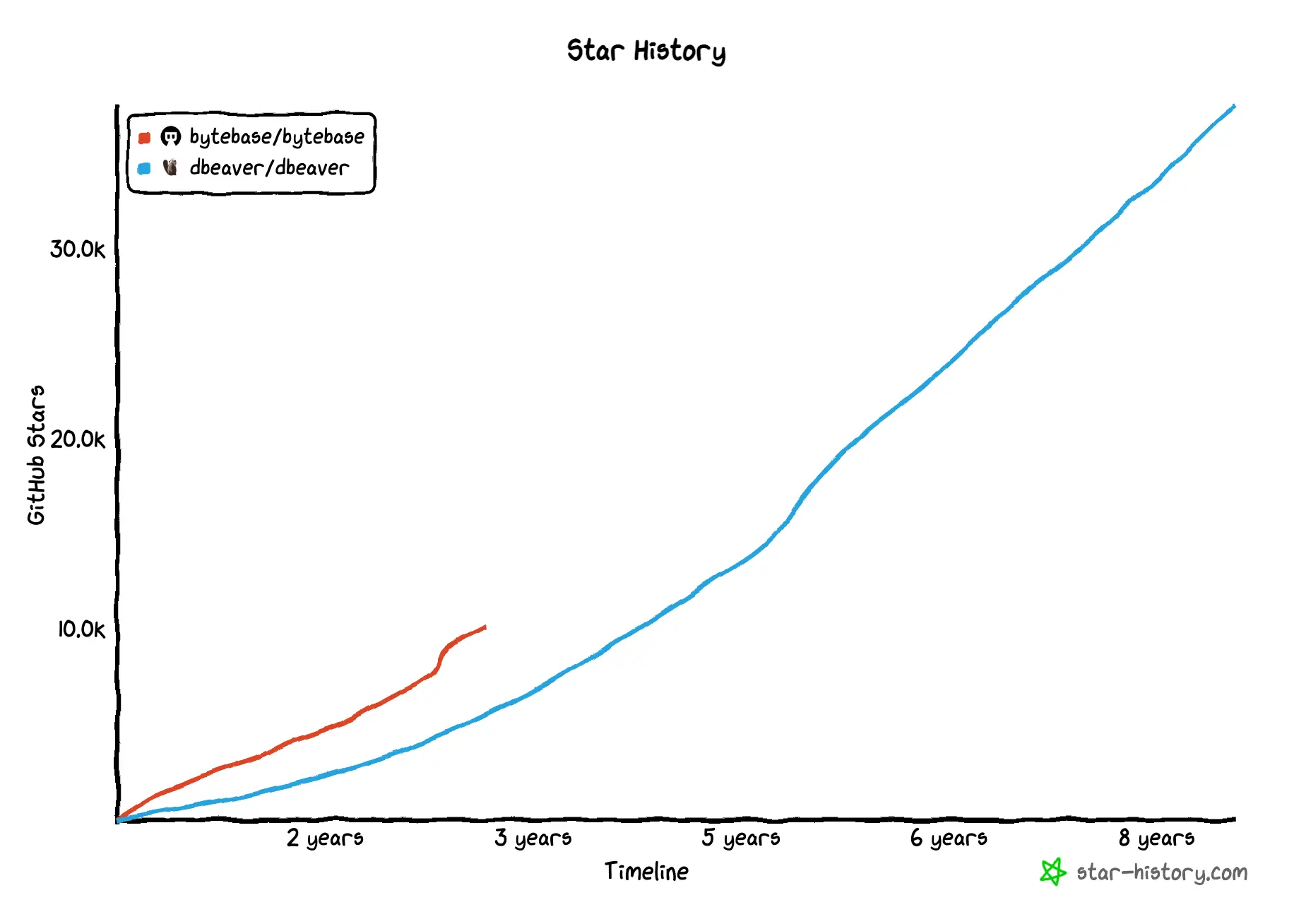
- Open source — DBeaver has a longer history; Bytebase's star growth has outpaced it since 2023.
Key Differences Between Bytebase and DBeaver
The most significant difference is that Bytebase is a server-side platform built for teams — DBAs centralize access control, data masking, and audit logging. DBeaver is a client-side tool built primarily for individual use, with a Team Edition that adds shared connections but still runs as a desktop app per user.
| DBeaver | Bytebase | |
|---|---|---|
| Product position | Powerful desktop SQL client | Database DevSecOps platform |
| Developer interface | Client-side, desktop-based | Server-side, web-based |
| Installation | Java-based, requires JVM | Go binary, no external dependency |
| Supported databases | 200+ | 23 |
| Query | ✅ | ✅ |
| Change | Direct | Review workflow (Git-style issue) + Admin mode |
| SQL review rules | ❌ | ✅ 200+ rules (free) |
| Access control | ❌ (Team Edition: shared conns only) | ✅ Free: workspace/project roles; Enterprise: database/table-level |
| Data masking | ❌ | ✅ Enterprise (dynamic, column-level) |
| Compare schema | 1:1 (Pro) | 1:N (free) |
| Audit log | ❌ | ✅ Pro |
Product position
-
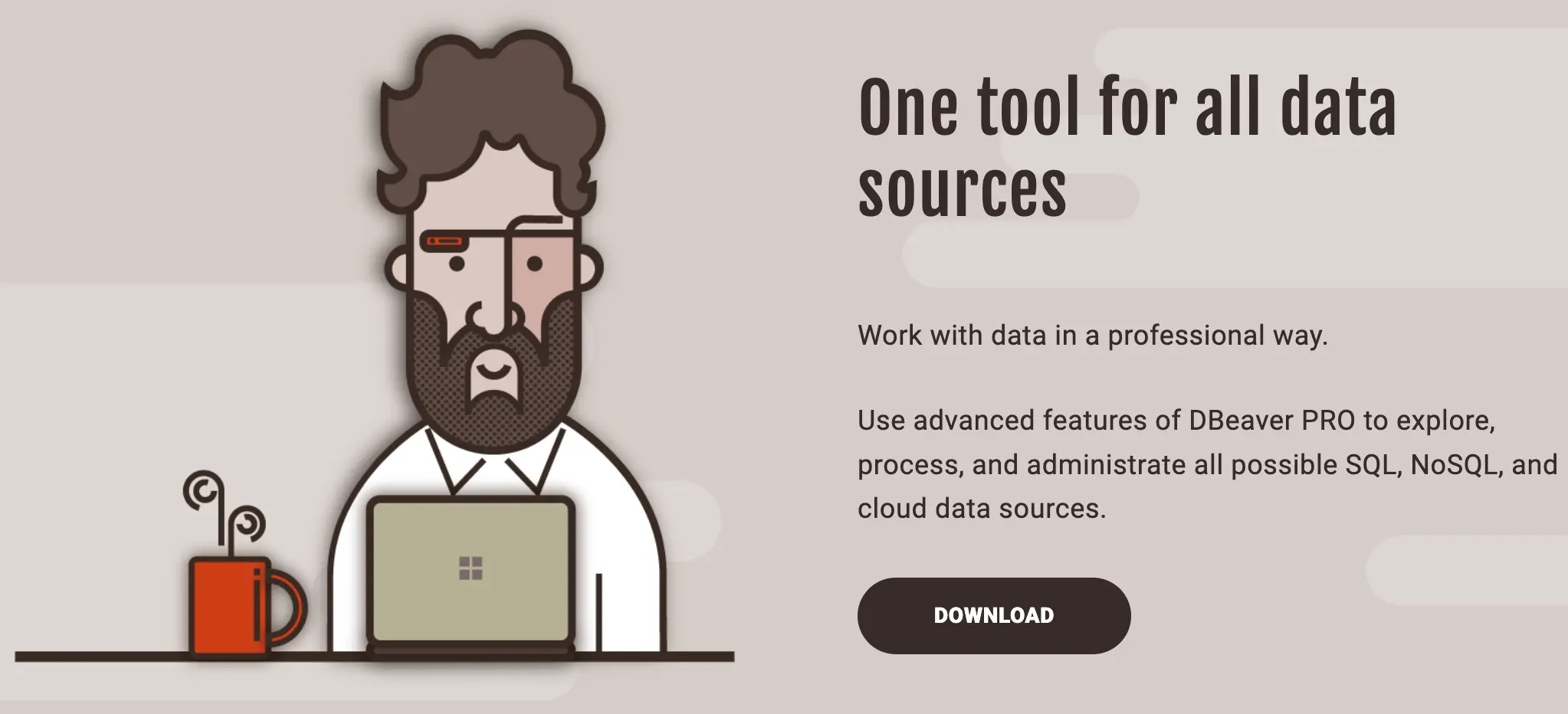
DBeaver: A universal SQL client. It started as an individual desktop tool and expanded to a Team Edition and a web-based CloudBeaver. Its center of gravity is still individual database management — rich query editor, data viewer, schema browser, ER diagrams.
-
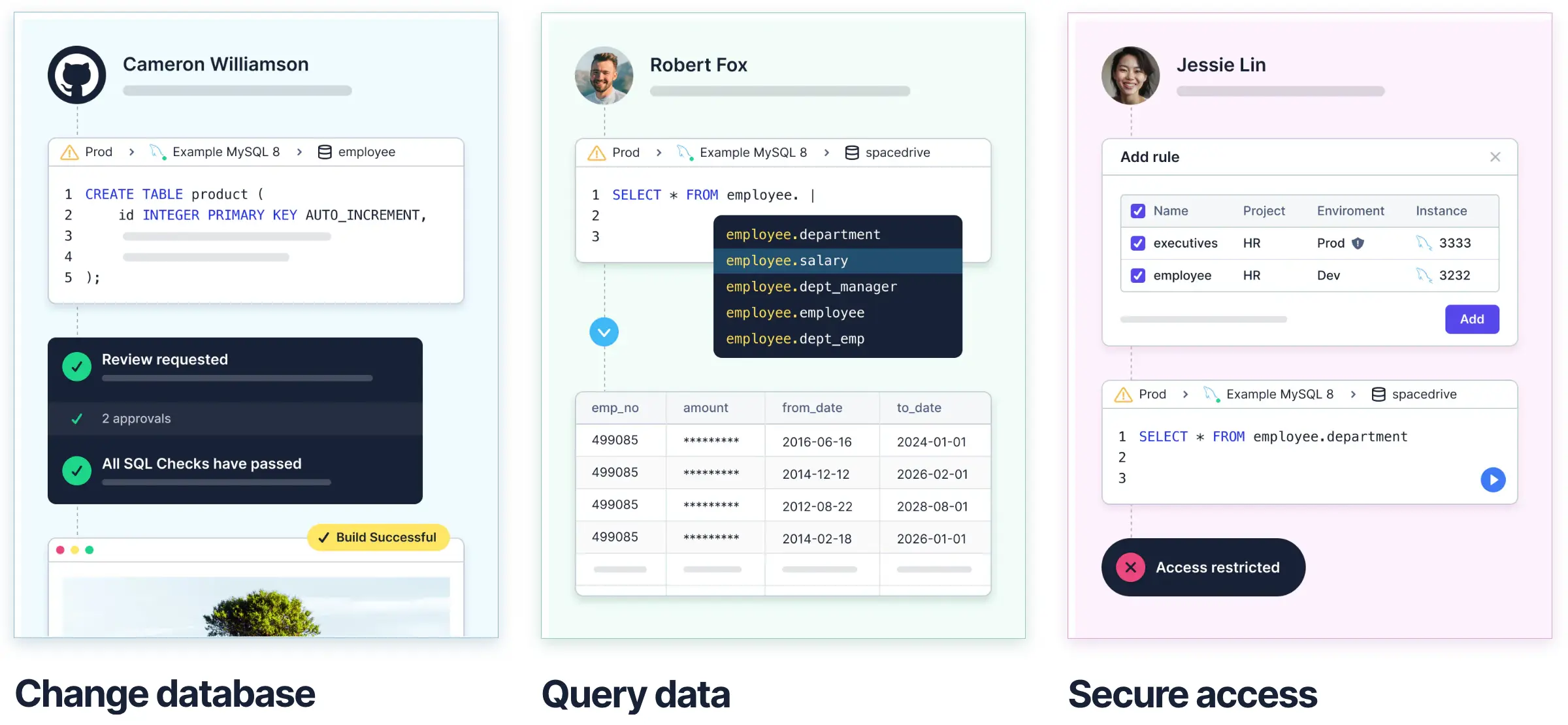
Bytebase: A database DevSecOps platform for developers, DBAs, and platform teams. Built around team workflows — change review, custom approval flows, access control, data masking, audit logging — with a SQL Editor layered on top.
Developer interface
-
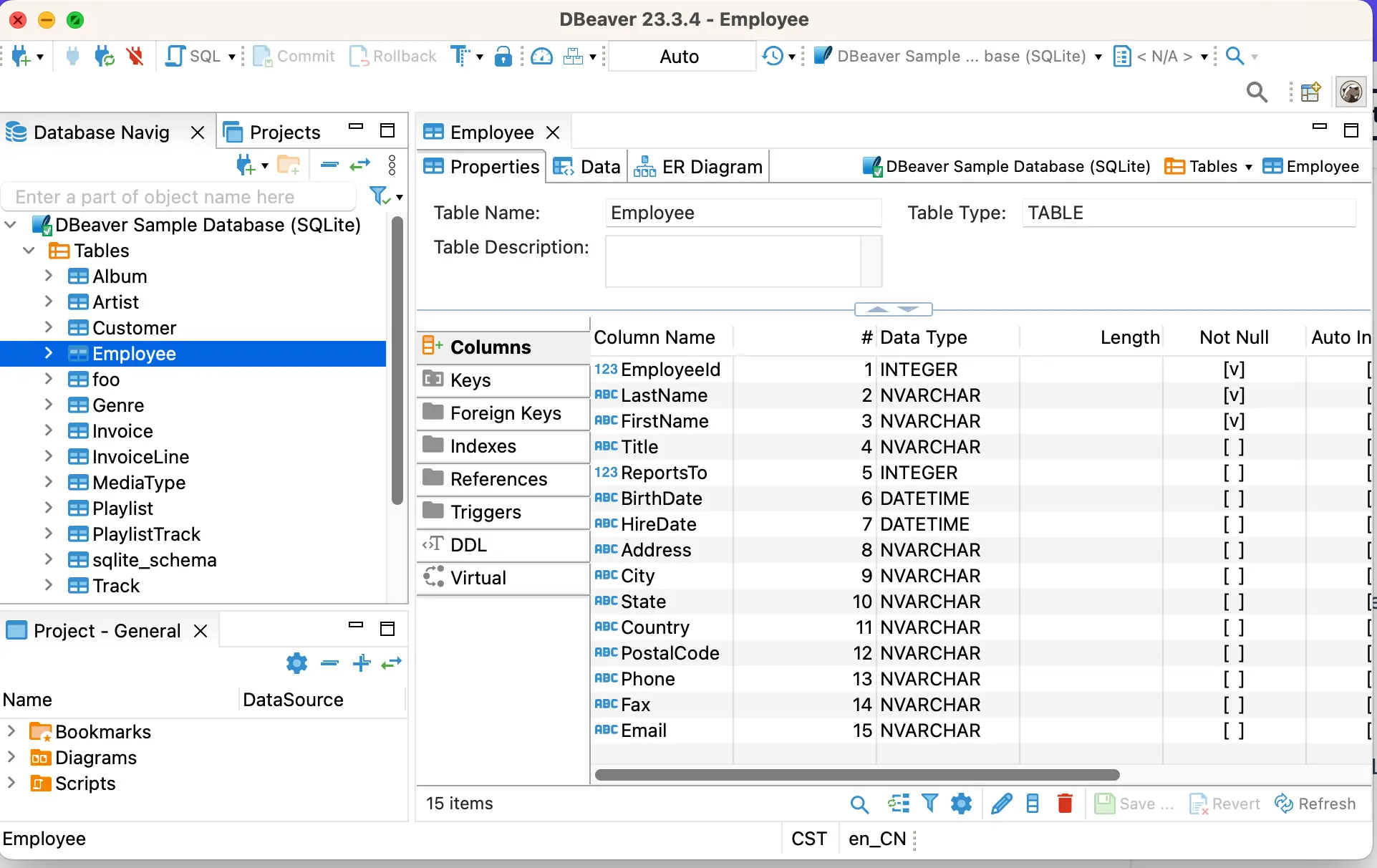
DBeaver: Desktop GUI on Windows / macOS / Linux. Every user installs it locally and connects directly to databases. DBeaver Team Edition adds a shared connection store, but the client is still a per-user desktop app.
-
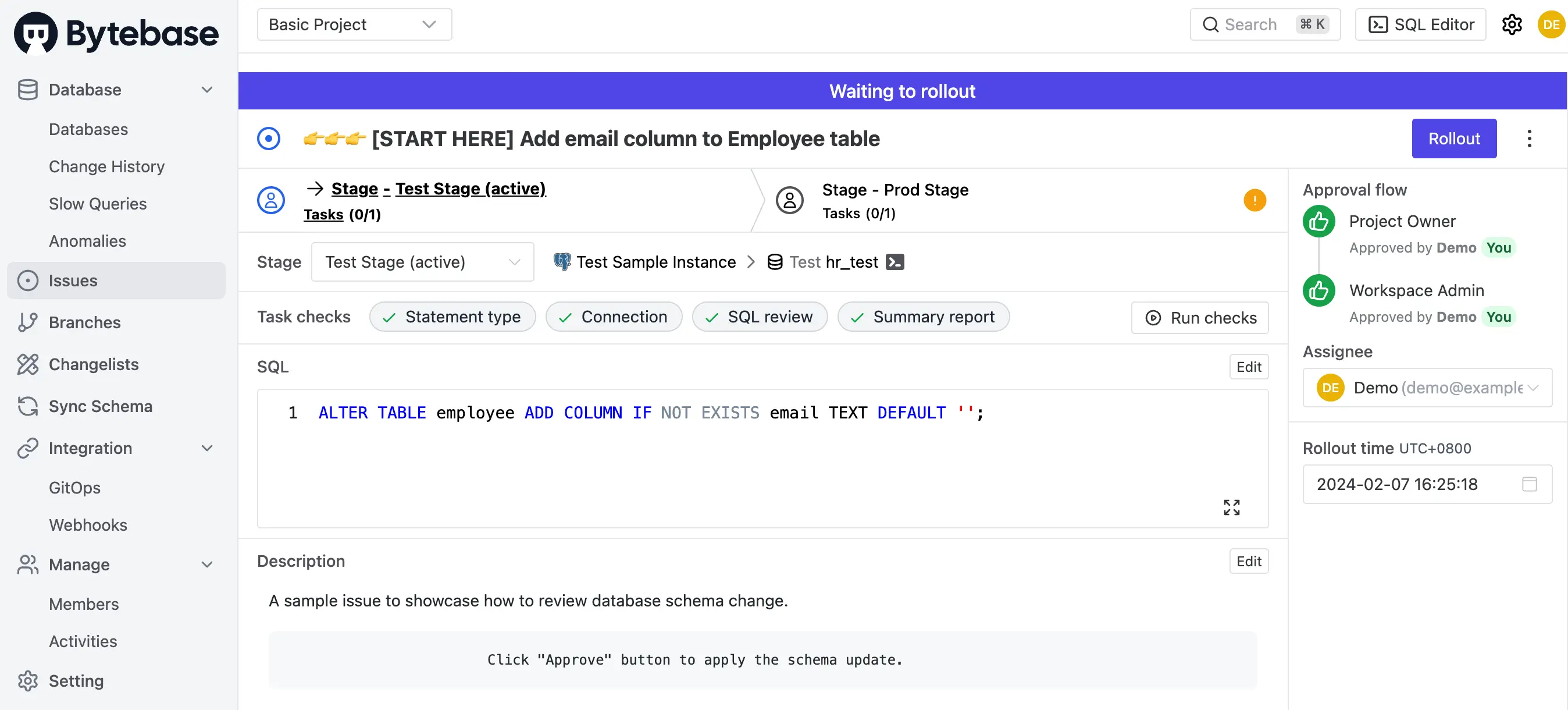
Bytebase: Web GUI with an issue-based change workflow plus a SQL Editor for querying. Also exposes an API, a Terraform provider, and GitOps for teams that prefer automation.
Installation
-
DBeaver: Download from the official website — bundled with Eclipse and a JVM. DBeaver Team Edition requires a server on Linux or macOS.
-
Bytebase: Single Go binary, no external dependencies. Also ships as a Docker image and Helm chart for Kubernetes.
Supported databases
-
DBeaver: 200+ databases in the Community edition via JDBC, covering MySQL, PostgreSQL, Oracle, SQL Server, SQLite, and many more. The Pro editions (Ultimate, Team) add NoSQL drivers (MongoDB, Cassandra, Redis, DynamoDB) and cloud warehouses (Redshift, BigQuery, Snowflake, Databricks).
-
Bytebase: 23 engines with deep integration (not just query) — 9 RDBMS (MySQL, PostgreSQL, Oracle, SQL Server, MariaDB, TiDB, OceanBase, CockroachDB, Spanner), 6 NoSQL (MongoDB, Redis, Cassandra, DocumentDB, DynamoDB, Cosmos DB), 7 data warehouses (Snowflake, BigQuery, Redshift, Hive, ClickHouse, Databricks, StarRocks), and Elasticsearch. Each engine gets engine-specific SQL review rules, schema sync, and masking support.
Query
-
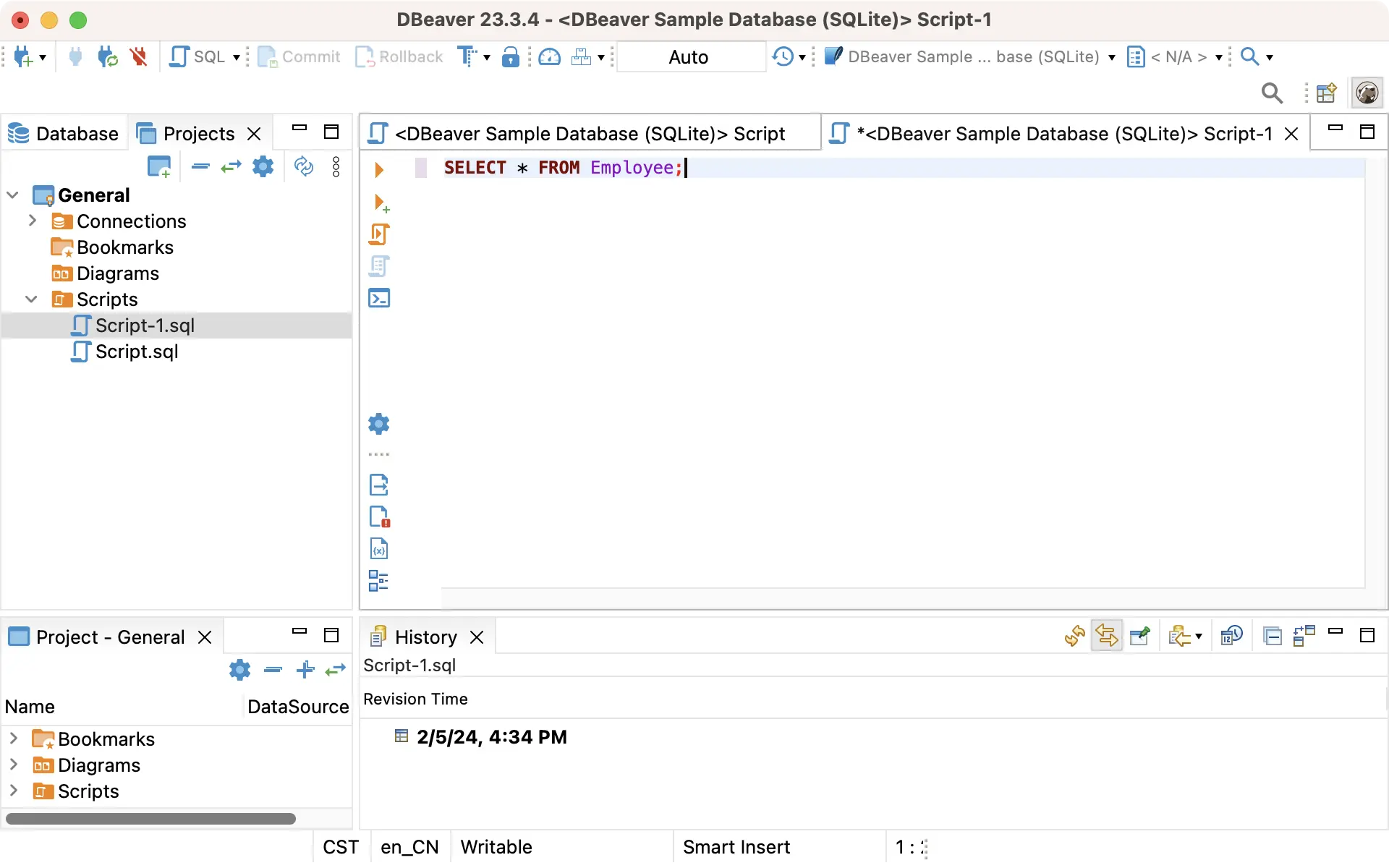
DBeaver: Query by double-clicking a table or by writing SQL in the editor with templates, syntax highlighting, and autocomplete. The GUI is dense and configurable — power users can tune toolbars, keybindings, and result grid behavior in detail.
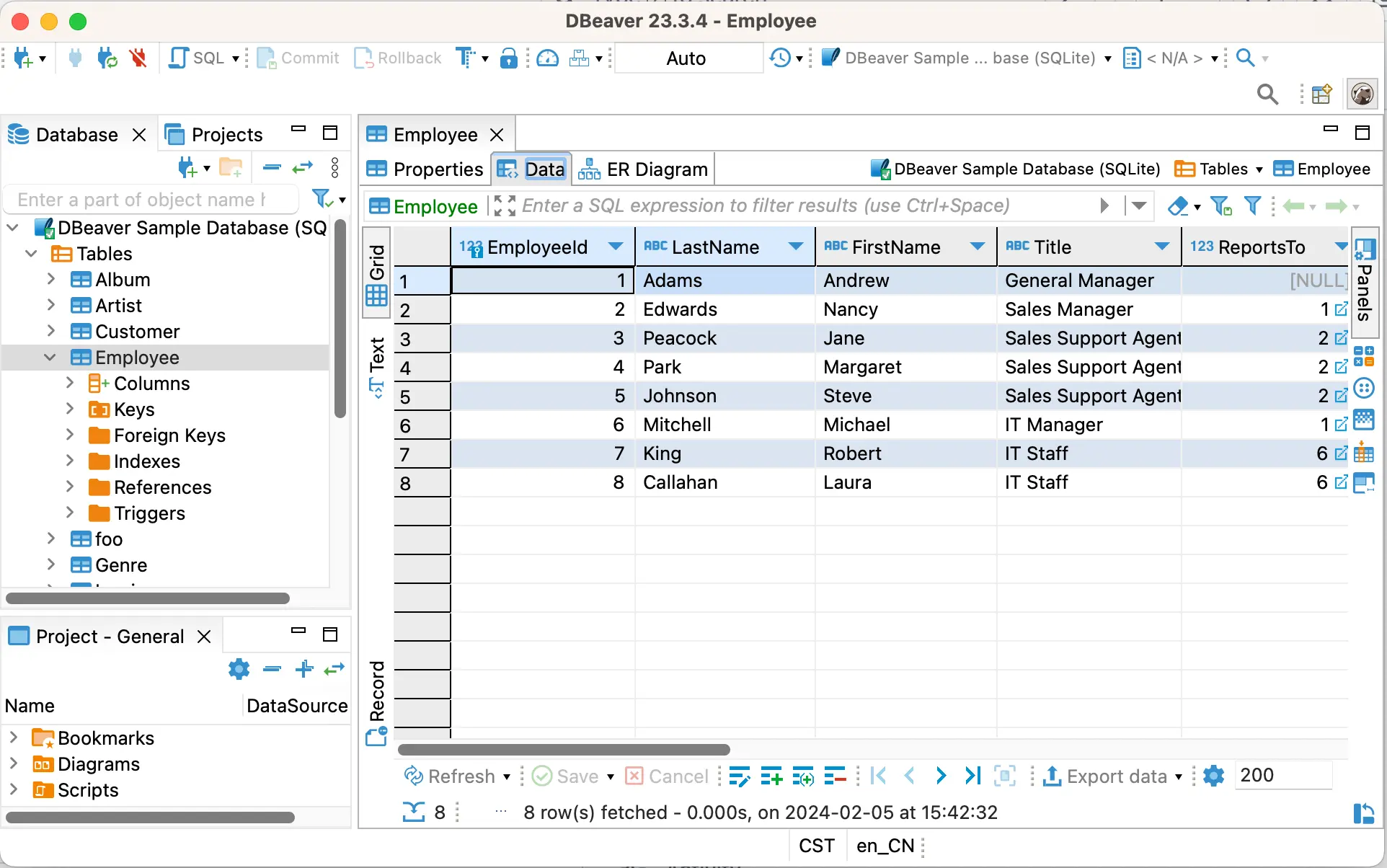
Saved scripts stay local in Community; Team Edition shares scripts and connections across the team.
-
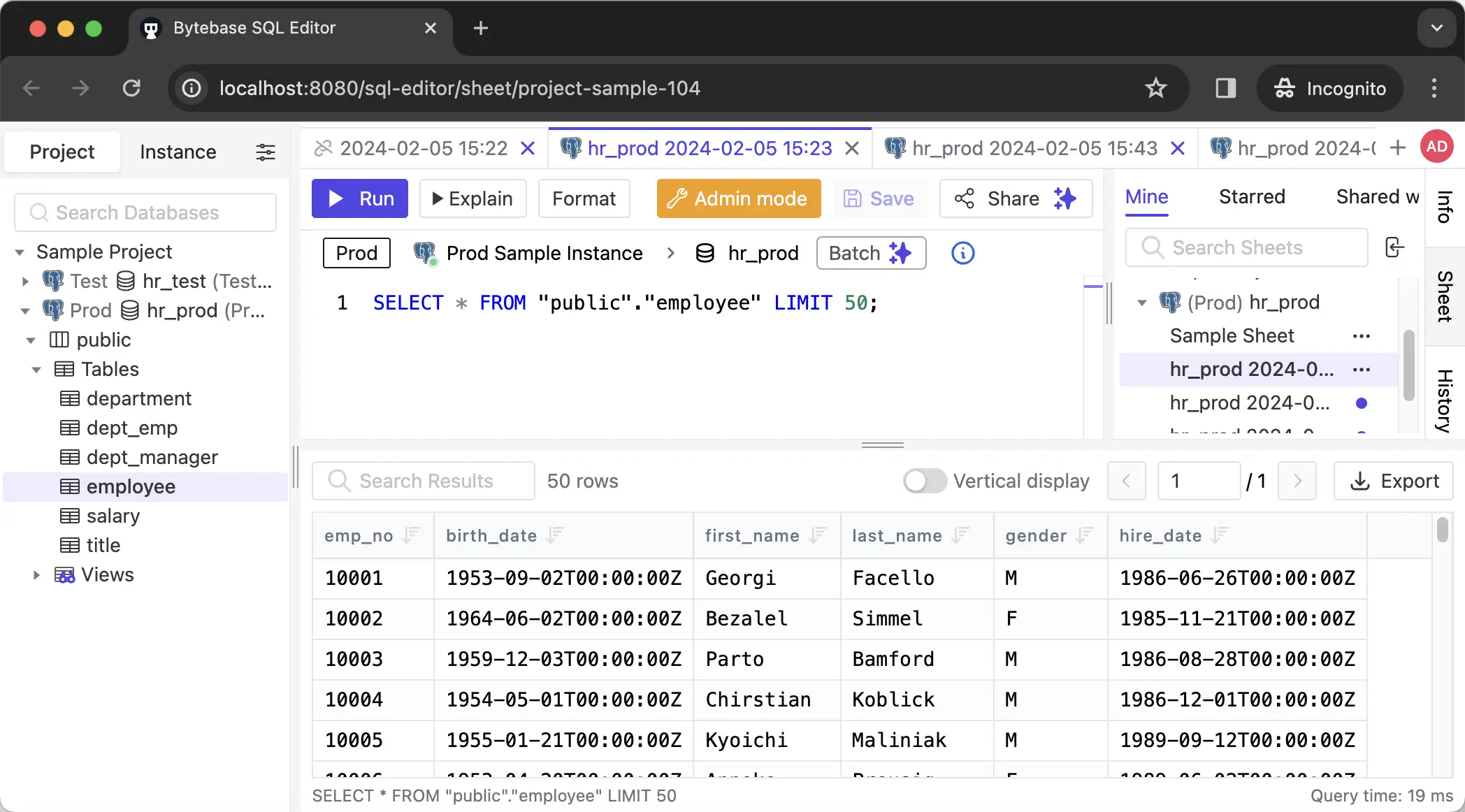
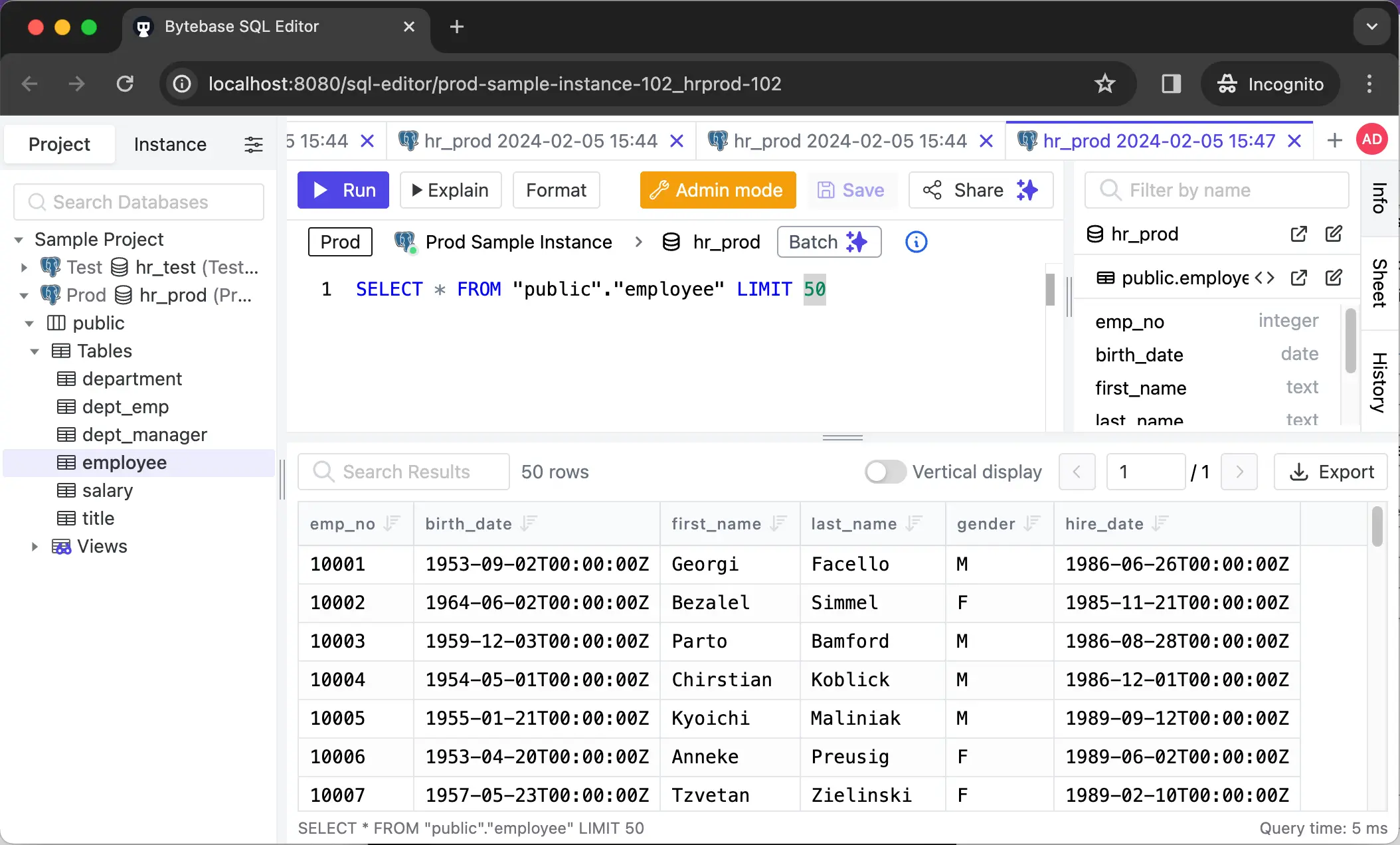
Bytebase: The SQL Editor runs queries through the platform — double-click a table or write SQL with autocomplete. The GUI is lighter than DBeaver but covers everyday querying, exporting, and chart-based visualization.
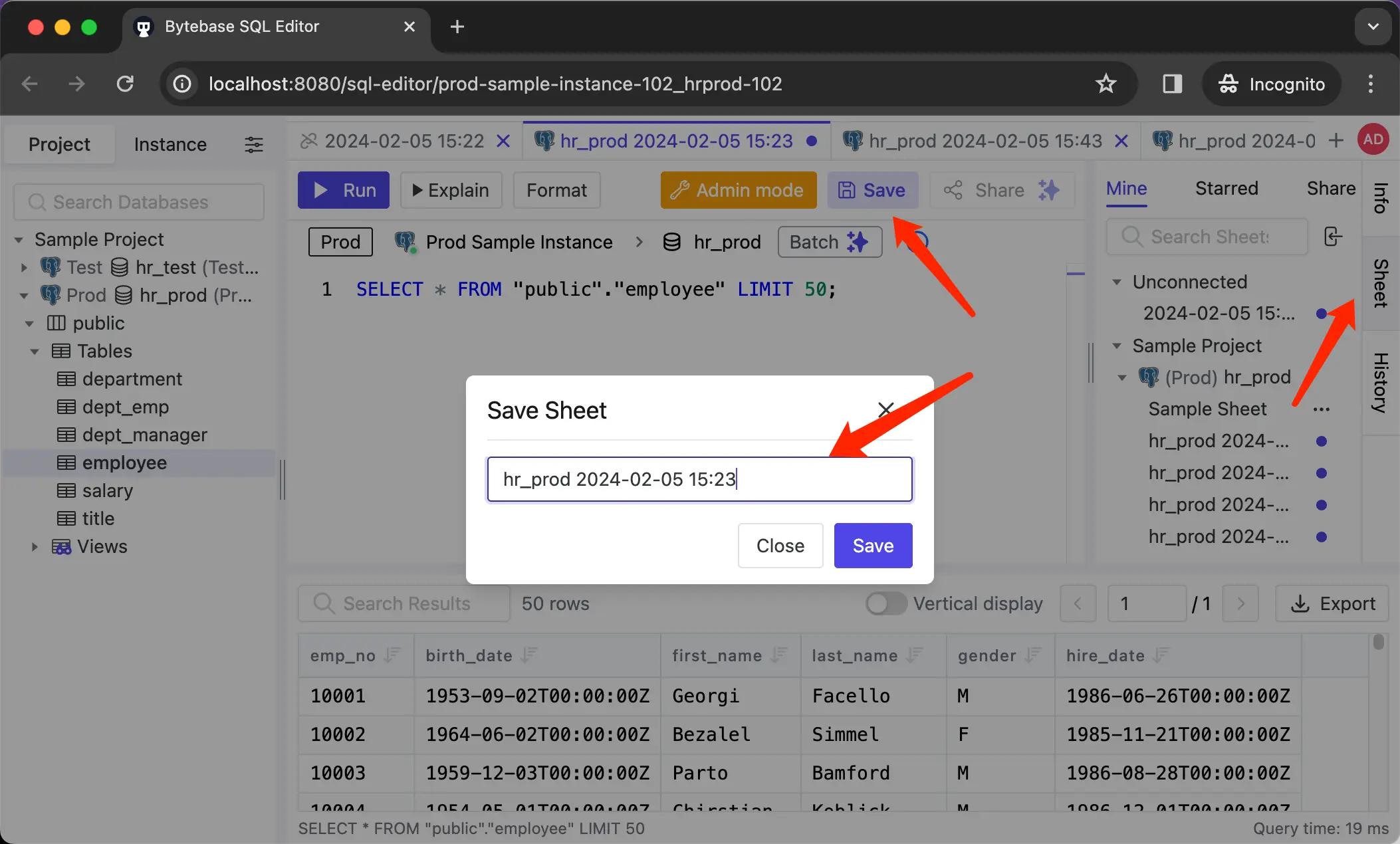
Save or star scripts for quick access. On Pro and above, share scripts with your team or project.
Change
-
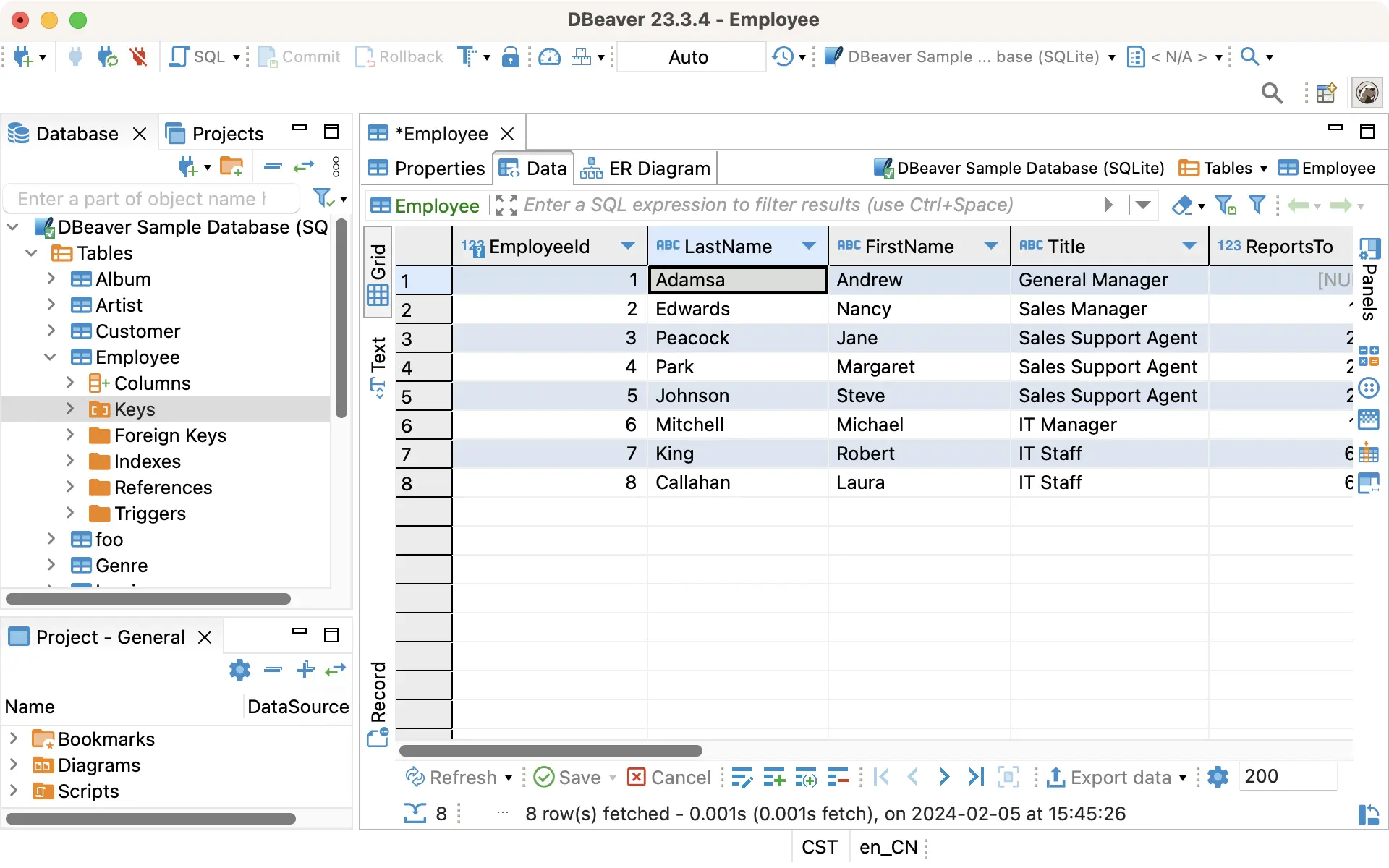
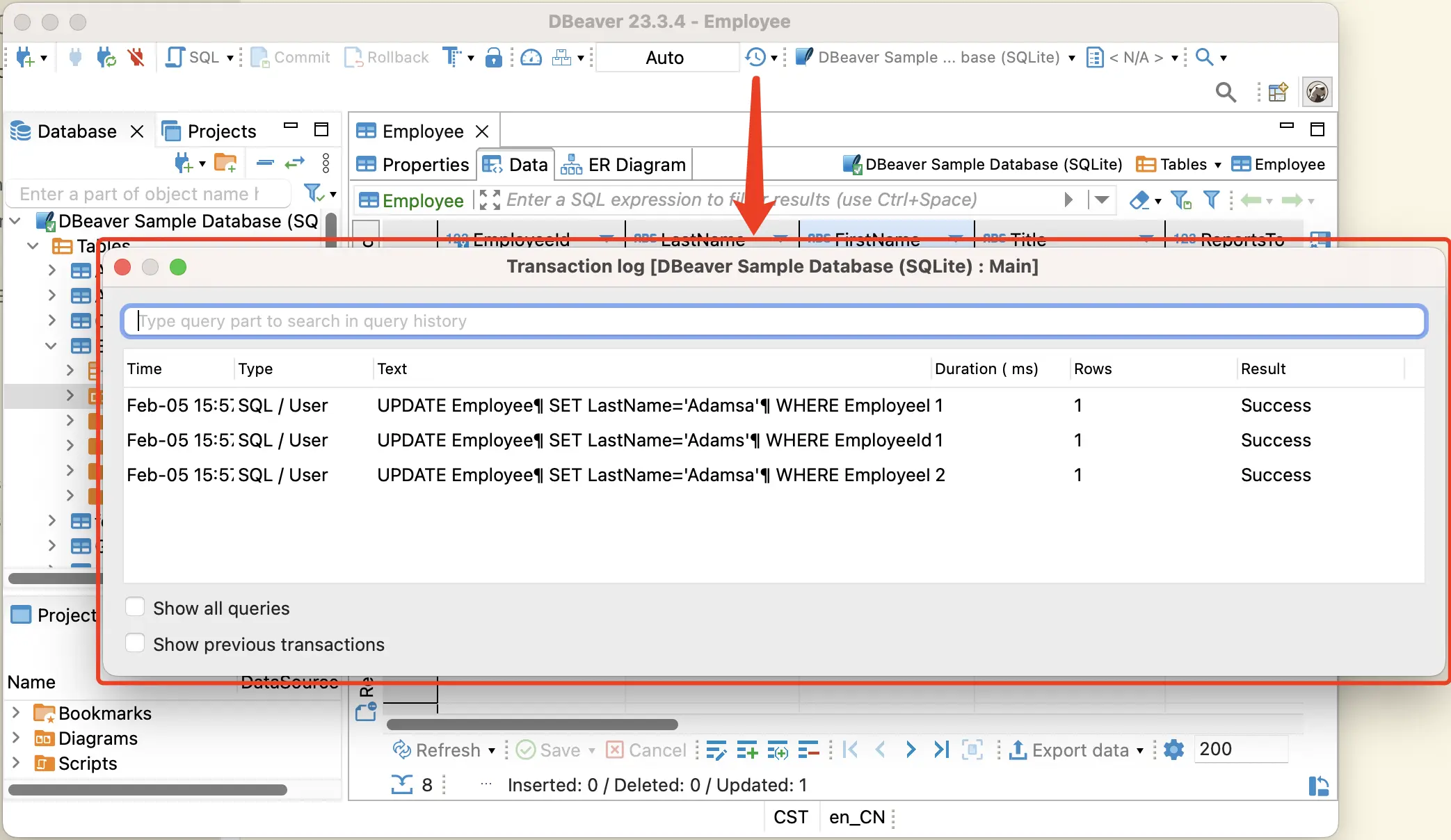
DBeaver: Edit data directly in the result grid or run SQL manually. Edits stay local to the user's session — no review, no approval, no centralized audit. A per-user transaction log records what you ran.
-
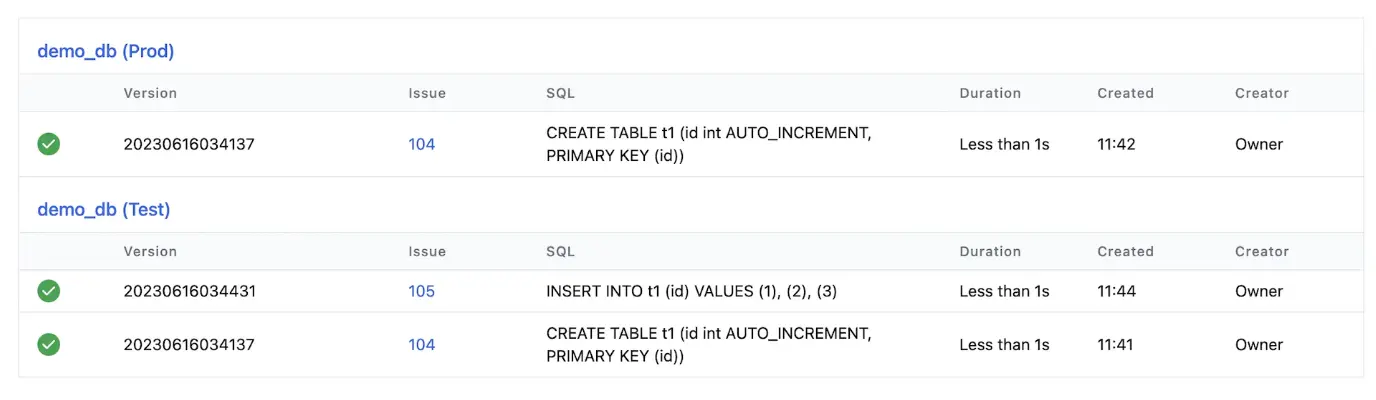
Bytebase: Changes flow through an issue — like a pull request for the database. Each issue runs automated SQL review (200+ rules), routes through a custom approval flow if configured, and deploys with full history tracking.
Every change is recorded in Change History with diff view and rollback scripts.
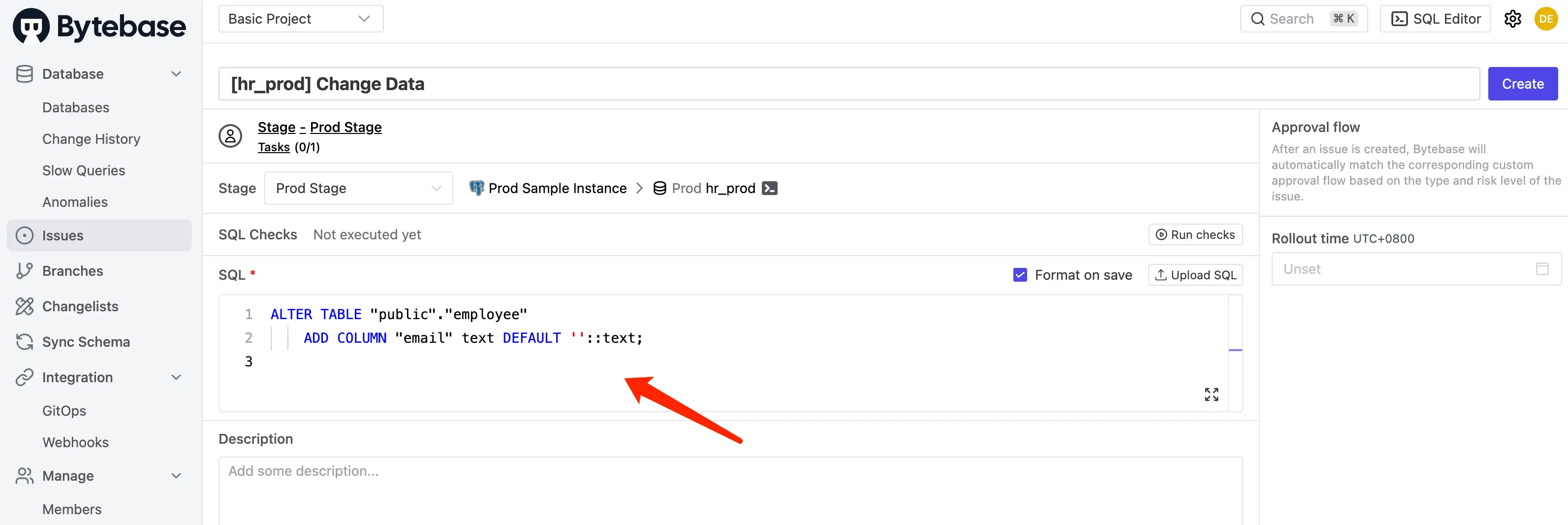
Ad-hoc DDL (e.g.
ALTER TABLEtyped into SQL Editor) either creates a new issue or requires Admin mode — a deliberate escape hatch for break-glass scenarios, similar to SSH on a server.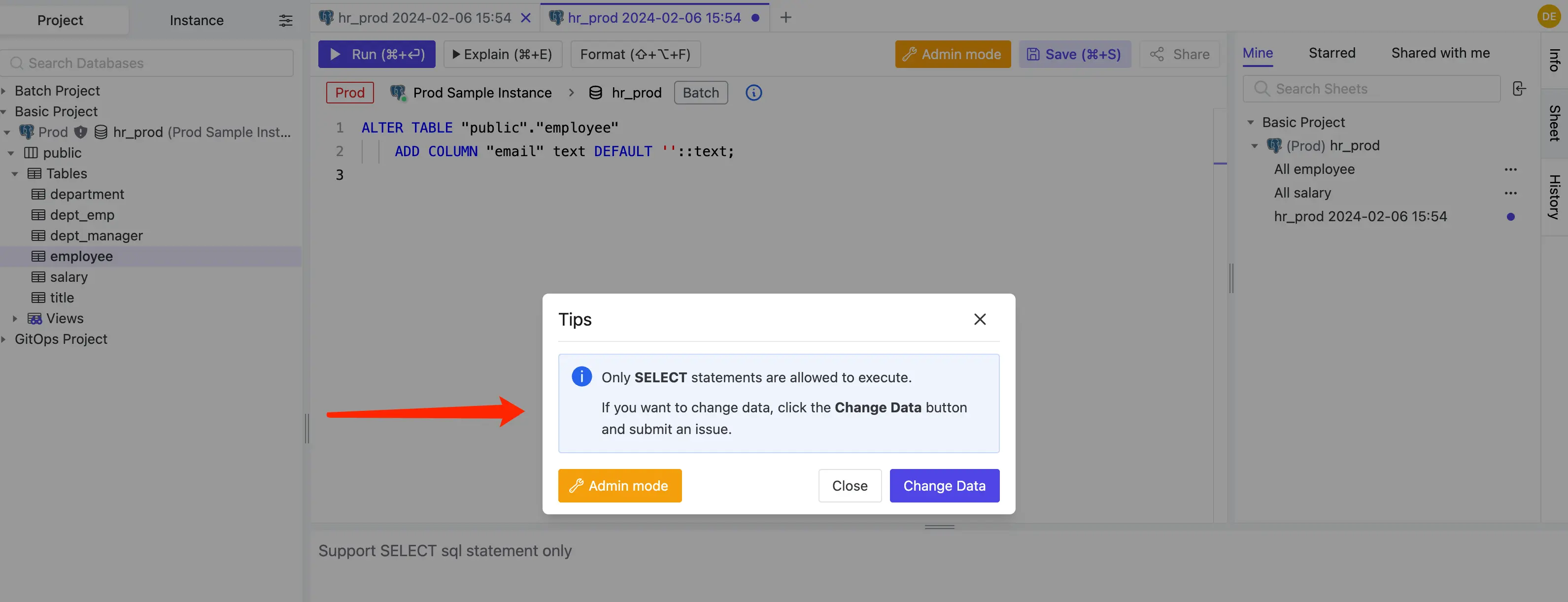
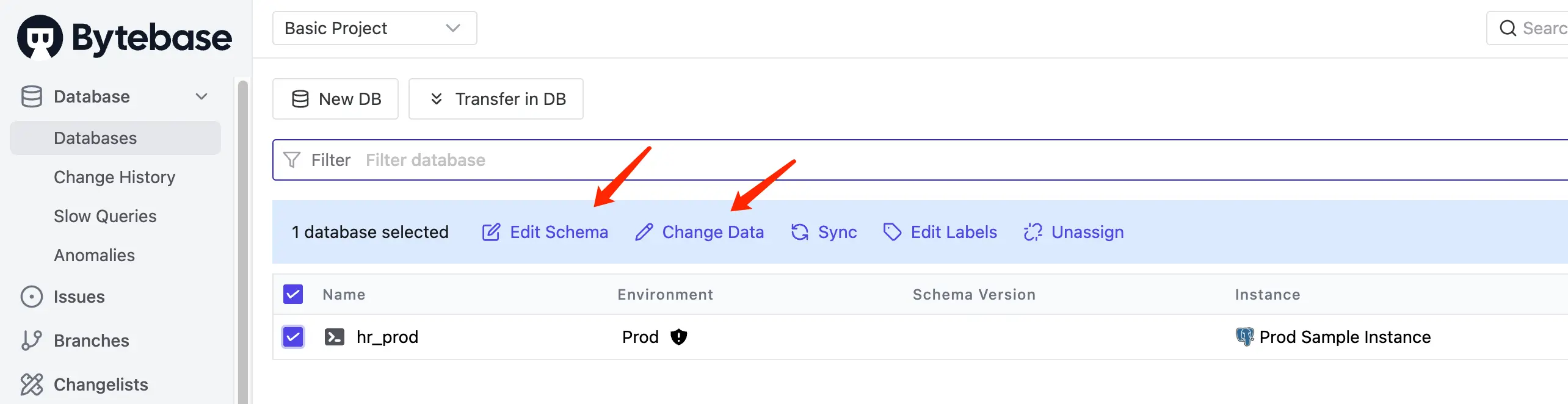
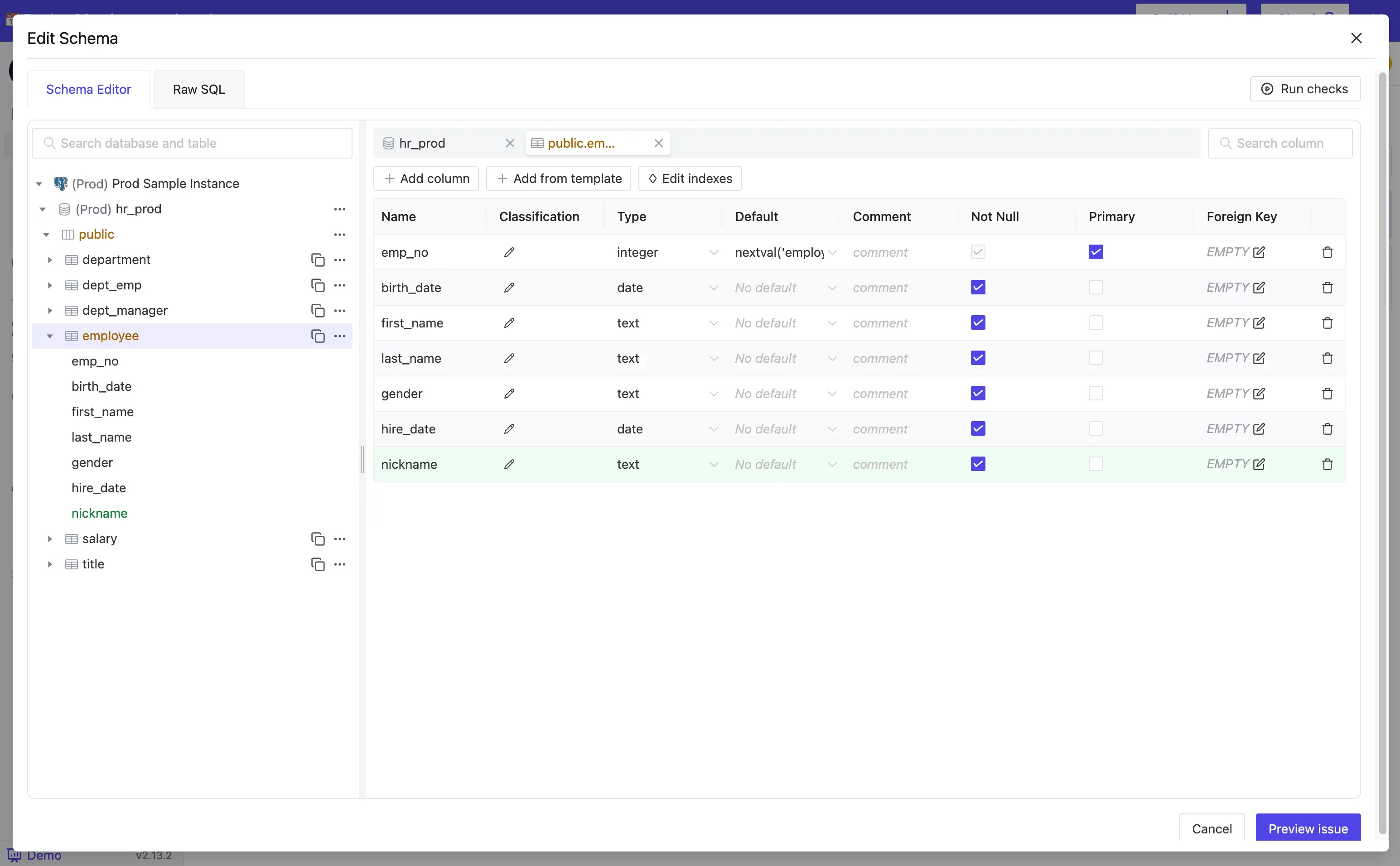
For schema changes, most teams use the visual Schema Editor — edit columns, constraints, and indexes in the GUI and Bytebase generates the DDL automatically.
Access Control
-
DBeaver: Desktop-based — each user's credentials live in their local client. DBeaver Team Edition centralizes connection storage and adds shared credential management, but actual database permissions are still whatever the DBMS grants each connecting user. No concept of granular permission control inside DBeaver itself.
-
Bytebase: Roles are scoped to Workspace and Project levels.
Workspace Admin/DBAprovision instances and manage members;Project Ownermanages databases, issues, and roles within their project. Individuals can hold multiple project-level roles likeProject Developer(change database) orSQL Editor User(query only).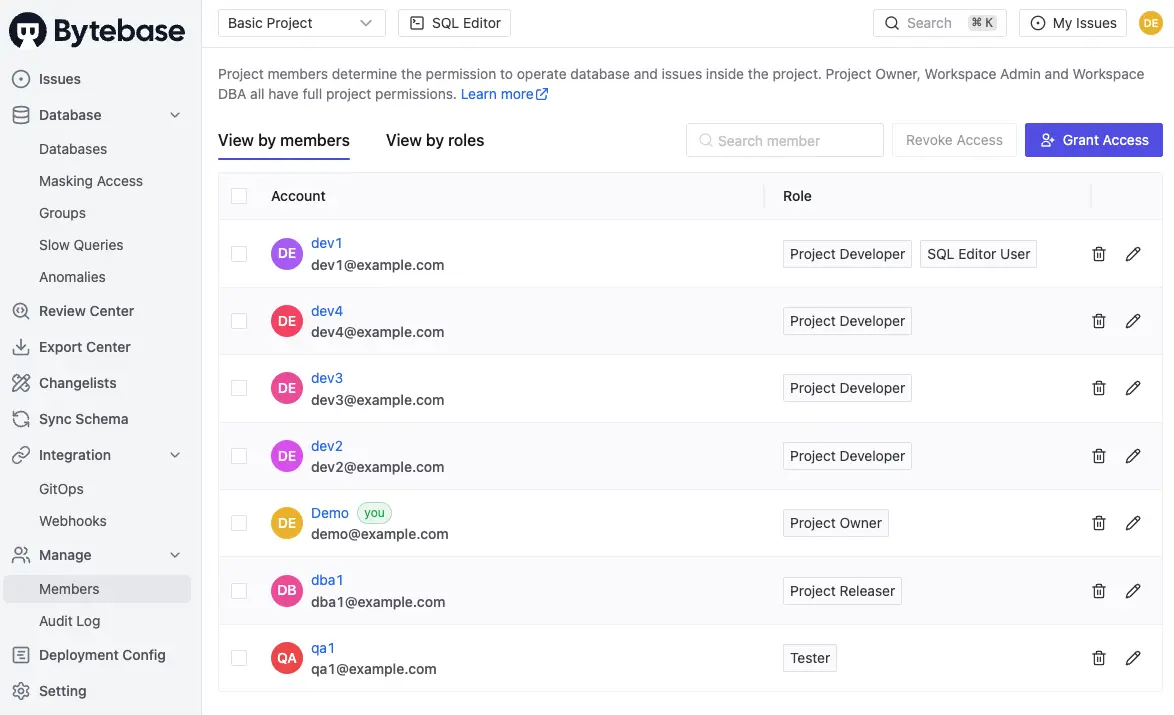
On Community, users only see projects they're assigned to. On Enterprise,
Project Ownercan grant access down to specific databases or tables, and developers can request Just-In-Time access via a request issue that expires automatically.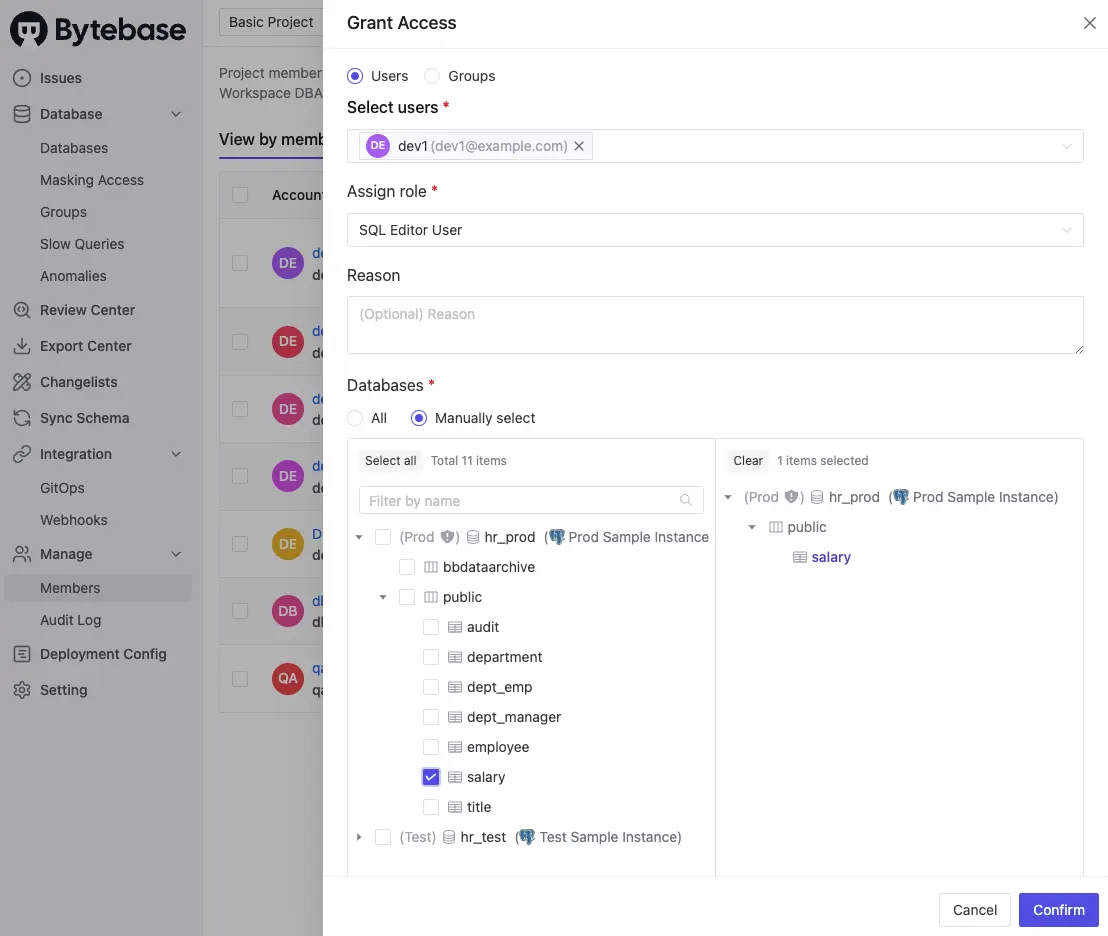
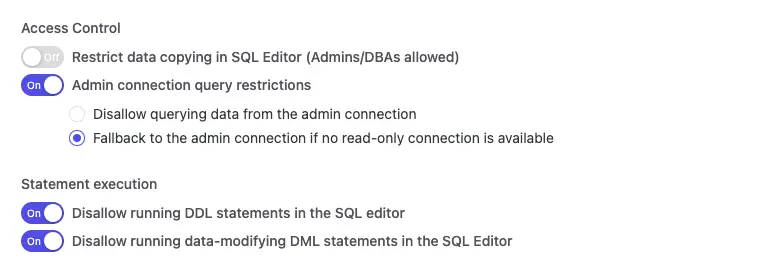
Different environments can enforce different policies — e.g., read-only access to production, full access to development.
Data Masking
-
DBeaver: No data masking. Because DBeaver is client-side, the raw data is already on the user's machine by the time it's rendered.
-
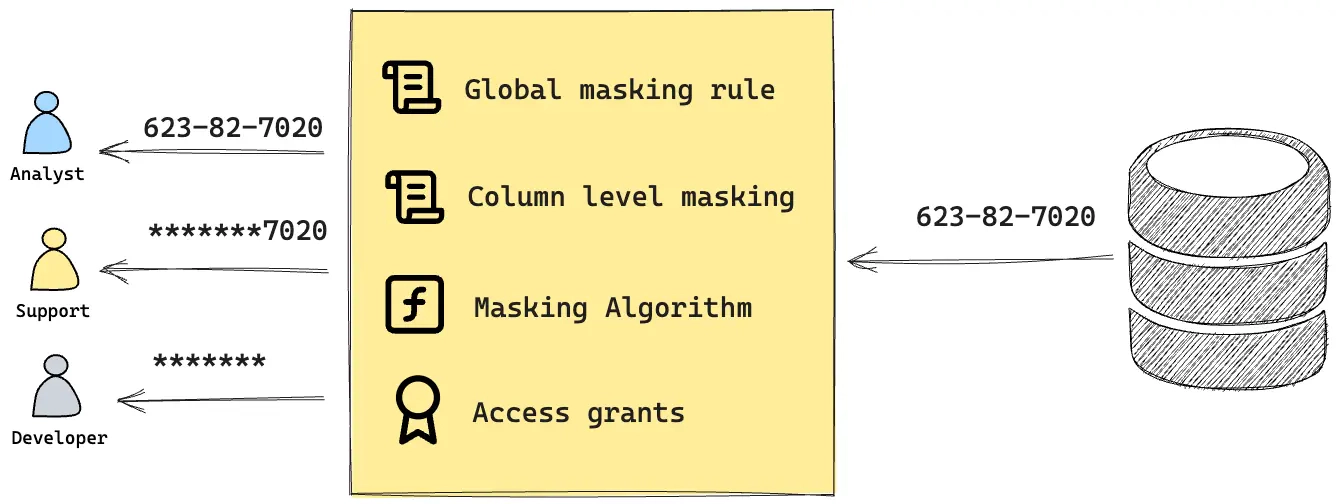
Bytebase: Dynamic data masking at the column level (Enterprise).
Admin/DBA/Project Ownerconfigure masking per column and authorize specific users to see the original data. Everyone else sees masked values in query results.Semantic types (email, phone, credit card, SSN) let you define reusable masking algorithms applied consistently across the schema.
Compare
-
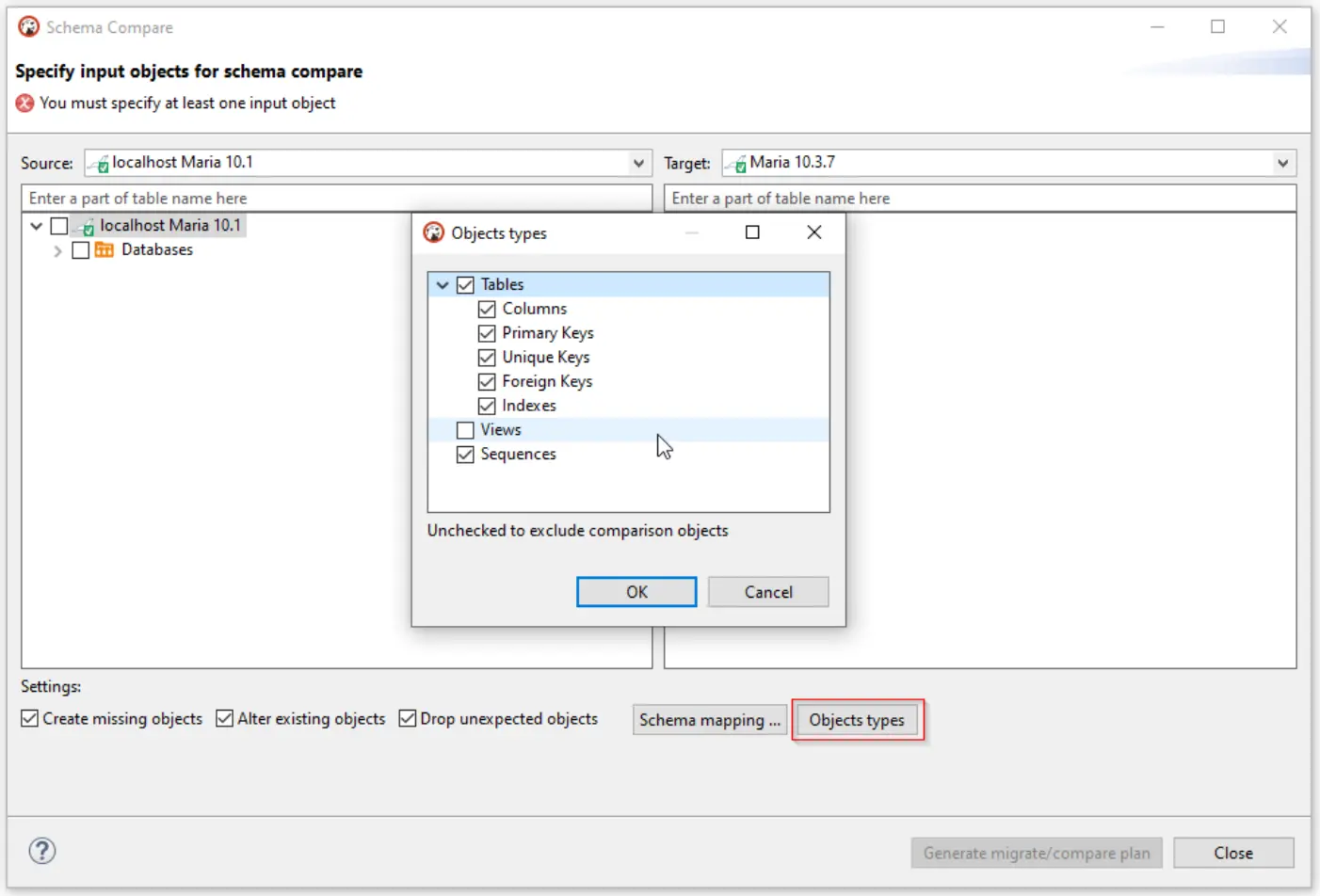
DBeaver: Schema compare is 1:1 — compare two databases at a time. Results export as DDL scripts or Liquibase changelogs. Available in DBeaver Pro.
-
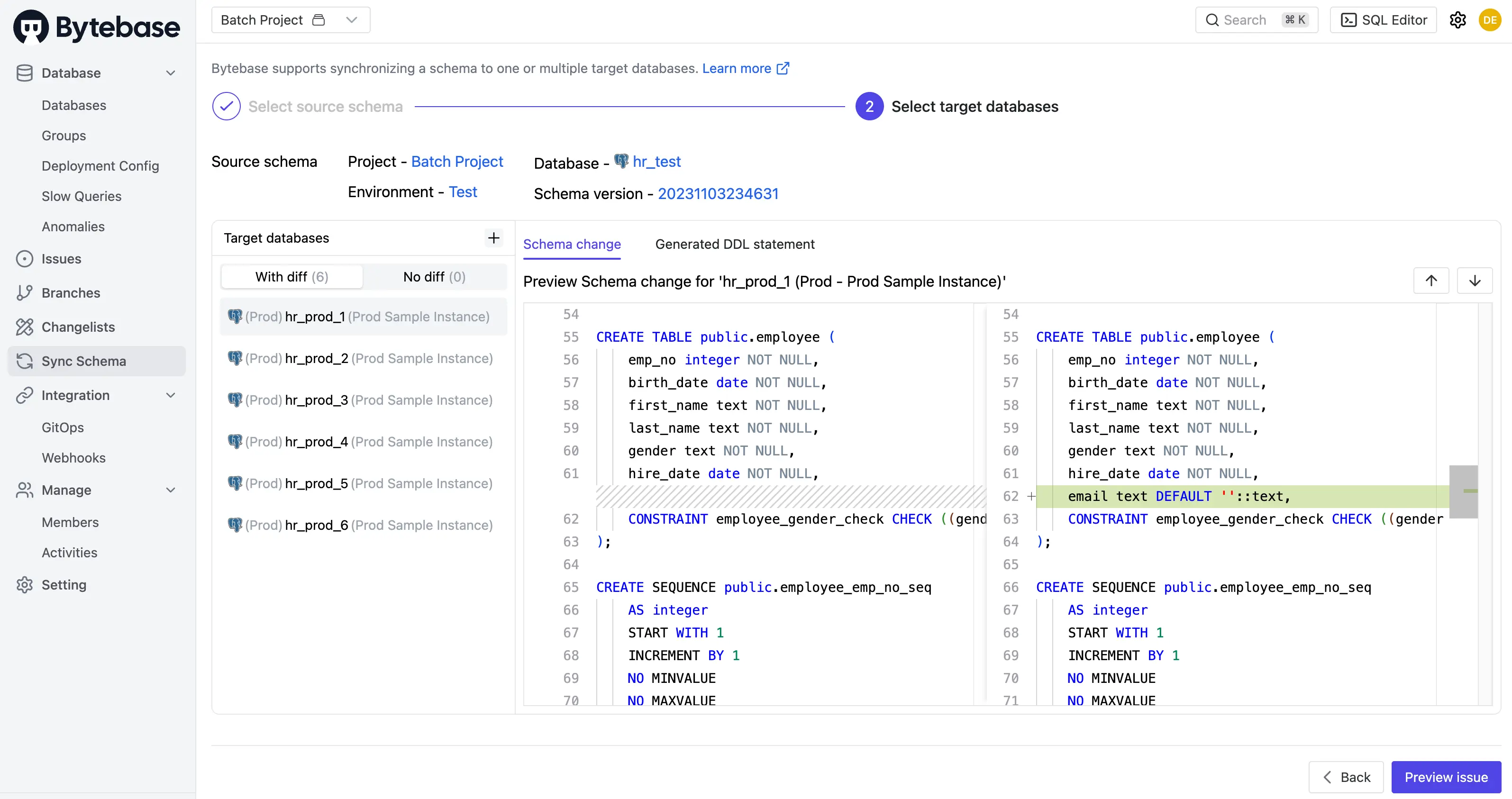
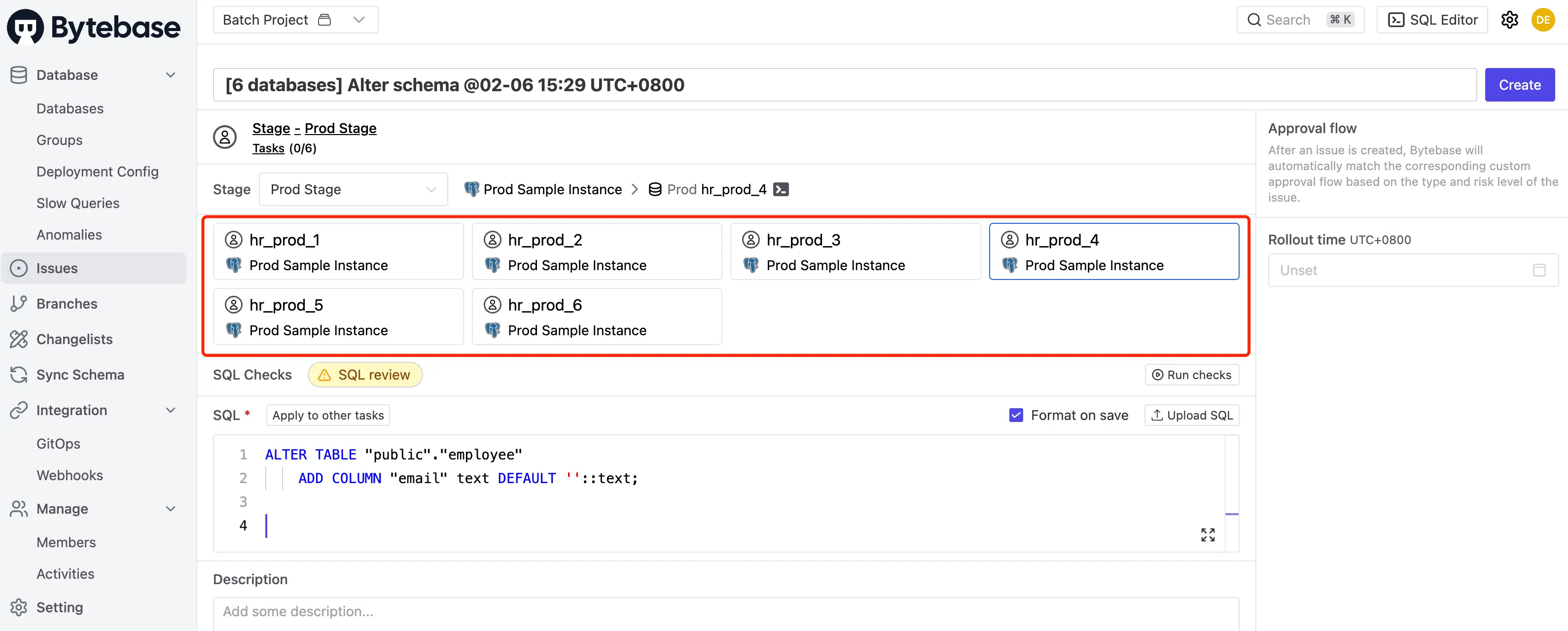
Bytebase: Schema Sync is 1:N (free) — pick one source database and compare against several targets at once. Results become a batch change issue that routes through SQL review, approval, and rollout.
Audit log
-
DBeaver: No audit log — client-side by design, so there's no central event stream to capture.
-
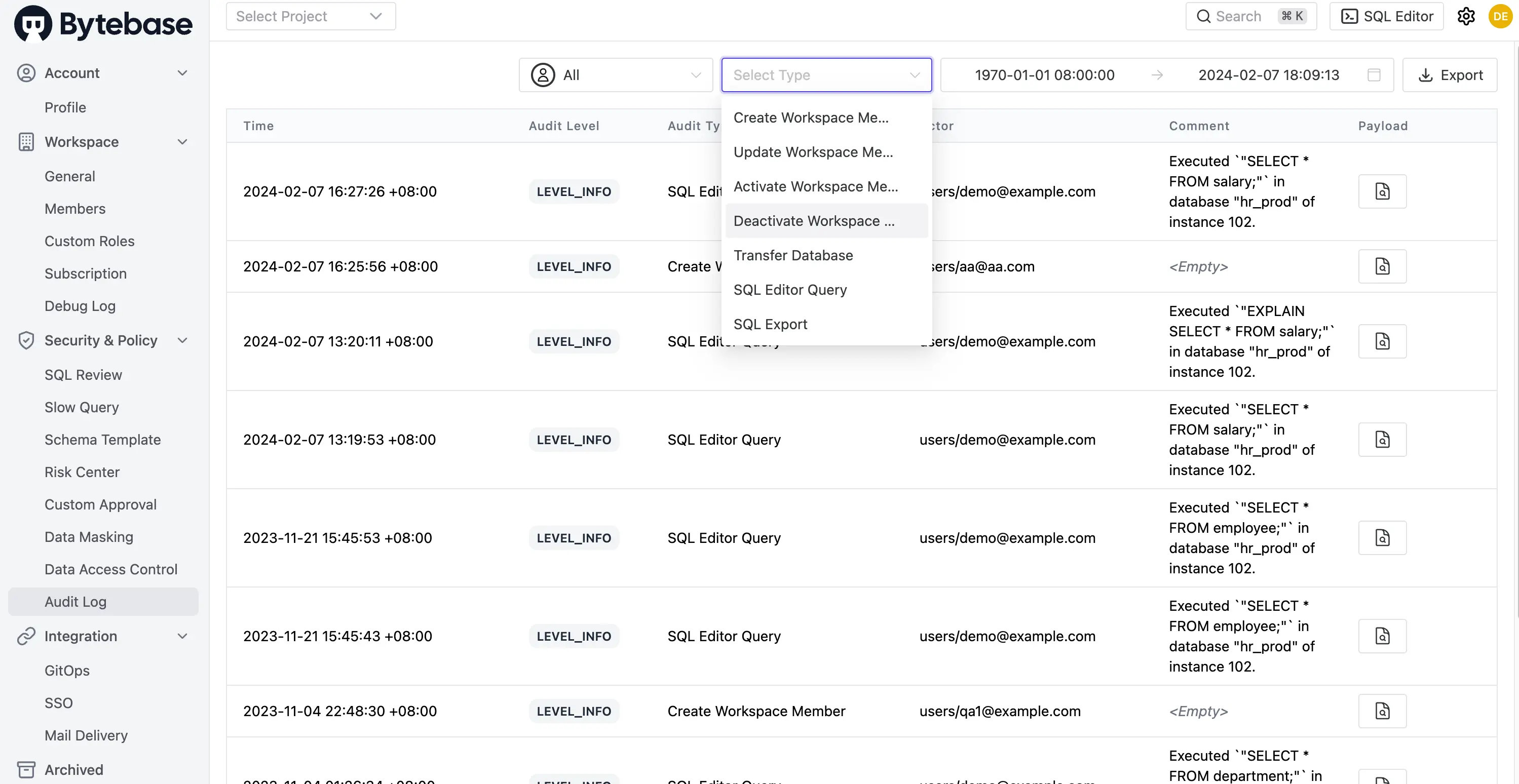
Bytebase: Audit Log (Pro and above) records every action in the platform — queries, DDL, approvals, policy changes. Filter by user, action type, or time range; export for SIEM ingestion.
Pricing
-
DBeaver: Community is free and open source. DBeaver Pro is $10/month for Ultimate (personal) or $15/user/month for Team Edition (collaborative, server-based). Enterprise is custom pricing.
-
Bytebase: Community is free, self-hosted, up to 20 users and 10 instances — includes SQL review, GitOps, multi-env rollouts. Pro is $20/user/month (cloud, up to 10 instances) and adds SSO, audit log, user groups. Enterprise is custom pricing, self-hosted or cloud, and unlocks dynamic data masking, custom approval flows, custom roles, SCIM, LDAP/OIDC SSO, and 2FA.
When to Choose DBeaver
- You need a powerful desktop SQL client to explore and edit data across many database types.
- Your team works individually — each developer manages their own connections and runs their own queries.
- You rely on JDBC breadth (200+ engines) and don't need server-side governance.
- Query convenience and rich UI features (ER diagrams, data transfer, visual query builder) matter more than review workflows.
When to Choose Bytebase
- You want a single platform that covers change review, access control, data masking, and audit logging — not just a SQL client.
- Developers write changes and DBAs (or platform engineers) review and deploy them.
- You need compliance artifacts — approval trails, audit logs, masking — for SOC 2, GDPR, or internal policy.
- You want database changes treated like code changes: reviewed, approved, traceable, and rolled out across environments.
FAQ
Can I use DBeaver and Bytebase together?
Yes — many teams do. Developers use DBeaver locally for rich data exploration and ad-hoc querying, and submit schema or production data changes through Bytebase for review and controlled rollout. DBeaver handles "I need to explore"; Bytebase handles "this change is going to production."
Does Bytebase replace my local SQL client?
For everyday querying across reviewed databases, yes — the SQL Editor works well. For deep data exploration, complex result-grid operations, or connecting to obscure JDBC databases, a desktop client like DBeaver still has an edge. Bytebase's SQL Editor is built around team workflow, not raw client capability.
Is DBeaver Team Edition comparable to Bytebase?
Partially. Team Edition shares connections and scripts across a team and adds a server-based backend — but it doesn't add review workflows, approval flows, data masking, or audit logging. The core mental model is still "desktop clients connecting to a shared connection store."
Is Bytebase Community actually usable for production?
Yes. Community includes the full GUI, 200+ SQL review rules, GitOps integration, multi-environment rollouts, and batch changes — same core workflow as the paid tiers. Limits: 20 users and 10 instances. You upgrade when you need SSO, audit log (Pro), or compliance features like data masking and custom approval flows (Enterprise).
Related comparisons: